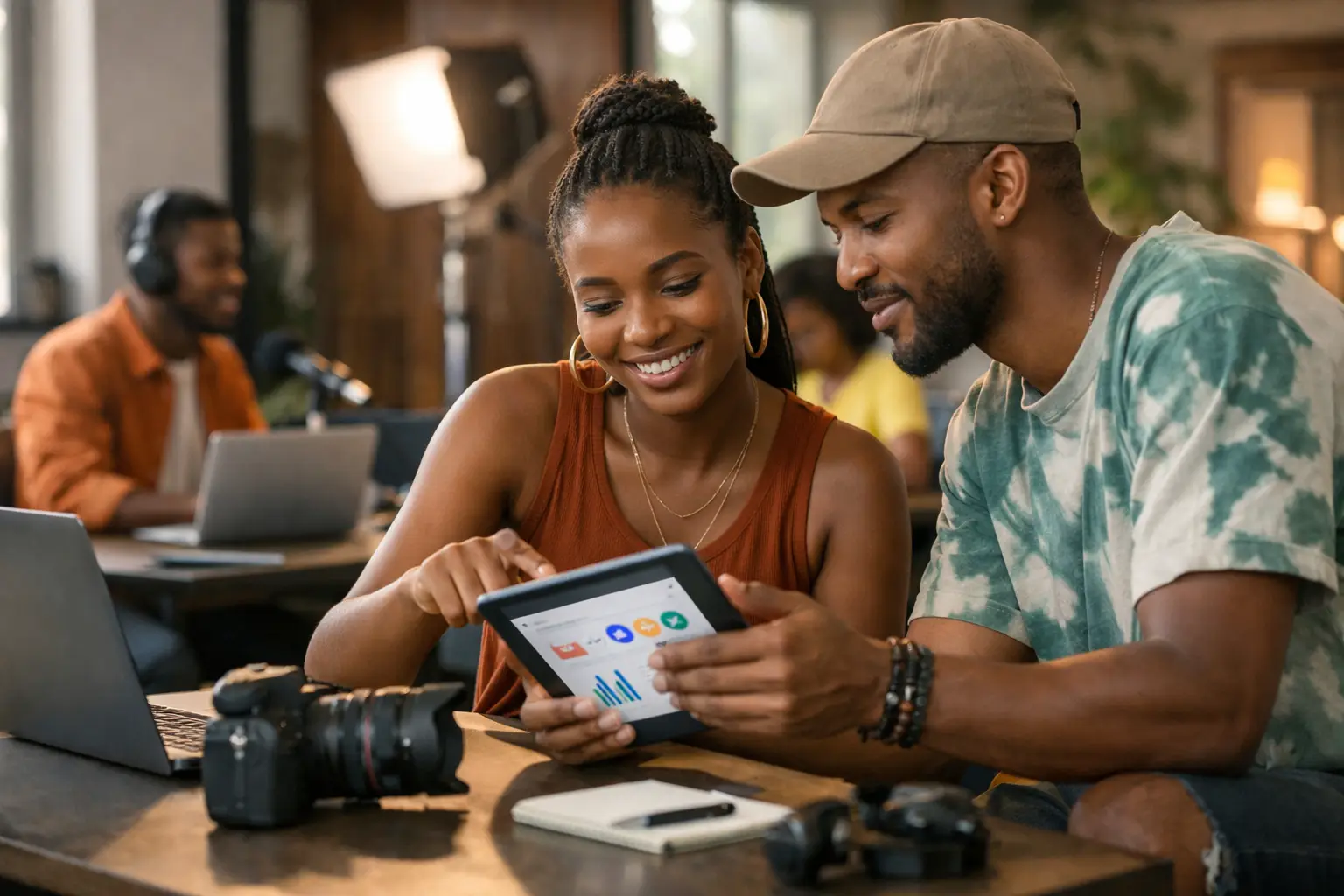
You can post a great video, a sharp campaign reel, or a polished photo set and still watch it stall. That is the frustrating gap content promotion services for creators are built to close. For creators, producers, and brand teams, the problem is rarely just making content anymore. It is getting the right people to see it, engage with it, and act on it.
Promotion is where many promising creative projects lose momentum. A creator may know how to shoot, edit, style, perform, or produce, but distribution requires a different skill set. Timing, platform behavior, audience targeting, repurposing, influencer fit, and paid support all shape whether content travels or disappears. If you are investing real time and budget into content, promotion should be treated like production – planned, staffed, and measured.
What content promotion services for creators actually cover
A lot of people hear the phrase and think it only means boosting posts. That is too narrow. Good content promotion services for creators usually sit at the intersection of strategy, distribution, partnerships, and performance tracking.
At the strategy level, promotion starts with positioning. Before anything gets pushed out, someone needs to answer basic but critical questions. Who is the content for? What action should follow? Which format has the best chance on each platform? Is the goal awareness, audience growth, bookings, sales, or press attention? Without those answers, creators often end up with activity that looks busy but does not move a career or a campaign forward.
Distribution is the next layer. This can include social posting plans, short-form edits from long-form footage, creator collaborations, outreach to niche communities, email placement, campaign scheduling, and selective paid media. In stronger setups, promotion is not an afterthought tagged onto finished work. It is built into the release plan.
Then there is the relationship side. Some promotion services focus on connecting creators with micro-influencers, community pages, media contacts, or industry networks that already have trusted attention. This matters because borrowed trust often performs better than raw exposure. Ten thousand views from the right audience can beat a hundred thousand views from people who will never hire, book, or follow you.
Measurement is what separates promotion from guesswork. Reach matters, but it is not enough. Creators should know whether a campaign led to follower growth, profile visits, inquiries, sign-ups, bookings, streams, or sales. For project owners, the same standard applies. If you hired creative talent and funded the content, promotion should tie back to business results.
Why creators should stop treating promotion like a final step
Many talented people still work in the wrong order. They create first, then ask how to market it after the fact. Sometimes that works if the content is naturally timely or highly shareable. Most of the time, it creates avoidable friction.
A better approach is to think about promotion while the content is still being developed. If a campaign needs teaser clips, behind-the-scenes footage, stills, partner edits, cast snippets, or localized versions, those assets should be planned during production. Waiting until everything is delivered usually means scrambling for material that was never captured.
This is especially true for creators building a professional reputation, not just chasing views. Actors need visible clips that casting teams can quickly assess. Models need distribution that reaches brands and stylists, not just casual scrollers. Editors, photographers, musicians, and crew need work presented in contexts that lead to more work. Visibility without direction can inflate numbers while doing very little for career growth.
For agencies and brand teams, the stakes are different but just as real. You may have a great creative concept and still underperform because the rollout lacked targeting or platform-native execution. Promotion is part of the campaign, not a nice extra.
What to look for in content promotion services for creators
The right service depends on where you are in your creative business. A new creator trying to find their niche needs different support than an established personality launching a branded series. Still, a few qualities matter across the board.
First, look for industry fluency. Promotion works better when the people handling it understand how creative careers actually grow. A music producer, a fashion creator, a filmmaker, and a micro-influencer do not all need the same audience pathway. Generic digital marketing language can sound impressive while missing the real dynamics of casting, commissioning, collaborations, and repeat bookings.
Second, look for platform awareness without platform dependence. A smart promotion partner knows the strengths of each channel, but they also understand the risk of building everything around one algorithm. If your growth only works on a single app, your business is more fragile than it looks.
Third, ask how content will be adapted. Promotion is rarely about publishing one asset everywhere. It often means cutting different versions, adjusting hooks, changing captions, shifting aspect ratios, or reframing the call to action by audience segment. Services that skip this step may save time, but they usually leave reach on the table.
Fourth, ask how success is defined. If the answer starts and ends with impressions, be careful. Awareness has value, but creators also need quality followers, inbound opportunities, and conversion signals. For project owners, success may be campaign traction, leads, bookings, or stronger brand recall. The right metric depends on the job.
The trade-offs: DIY promotion vs outsourced support
Not every creator needs a full-service promotion setup. If you have strong instincts, enough time, and a clear niche, managing your own promotion can work well. It keeps you close to your audience and helps you learn what resonates firsthand. It is also more affordable in the short term.
The trade-off is capacity. Promotion is a real workload. Planning releases, clipping content, writing copy, scheduling posts, managing paid spend, coordinating partnerships, and tracking performance can pull you away from the actual craft that makes your work valuable. For many creators, the issue is not knowledge. It is bandwidth.
Outsourcing can create speed and consistency, especially when you are juggling client work, auditions, shoots, edits, or production logistics. It can also open access to better targeting and stronger distribution networks. But outsourcing only works when the service provider understands your goals and your category. Handing your brand to the wrong team can flatten your voice and waste budget.
That is why marketplace-based support can be useful. Instead of forcing creators into one-size-fits-all packages, a specialized creative marketplace can make it easier to find promotion help that fits your discipline, campaign size, and workflow. A platform like Fameidols, for example, makes more sense for creative operators who need not only visibility support but also access to related talent and production resources in one working environment.
Where promotion creates the most value
Promotion matters most when the content already has a job to do. That could mean launching a personal brand, pushing a new release, filling a casting call, driving traffic to a project, supporting a product collaboration, or building authority in a creative niche.
The strongest results usually come when creators have three things in place. The first is a clear offer or identity. The second is content that reflects that offer well. The third is a promotion system that puts the content in front of people who can actually respond. If one of those pieces is missing, growth gets slower and less predictable.
This is why creators in fast-moving markets like Nigeria, Kenya, South Africa, and Ghana often benefit from promotion support that understands both local relevance and digital discoverability. Audience behavior, creator ecosystems, and partnership opportunities can vary by market. A promotion plan that ignores context may look polished while missing real traction.
How to know you are ready for promotion support
If your content quality has improved but your reach has not, that is a signal. If your audience is growing, but the wrong people are finding you, that is another. If you are booking some work but cannot build consistency, promotion may be the missing layer between talent and traction.
You may also be ready if content production has become operationally serious. Once you are spending on crews, rentals, editing, styling, or talent, relying on random distribution becomes expensive. Promotion helps protect the value of what you already created.
The best time to think about promotion is before your next release, not after a disappointing one. Build it into the project, assign responsibility, define the outcome, and choose support that matches your stage. Creators do not need more noise around their work. They need the right visibility, in the right places, with a path to real opportunity.
Great content deserves more than a post and a hope. Treat promotion like part of the production, and your next piece of work has a far better chance of reaching the people who can move your career forward.
Leave your comment
You must be logged in to post a comment.