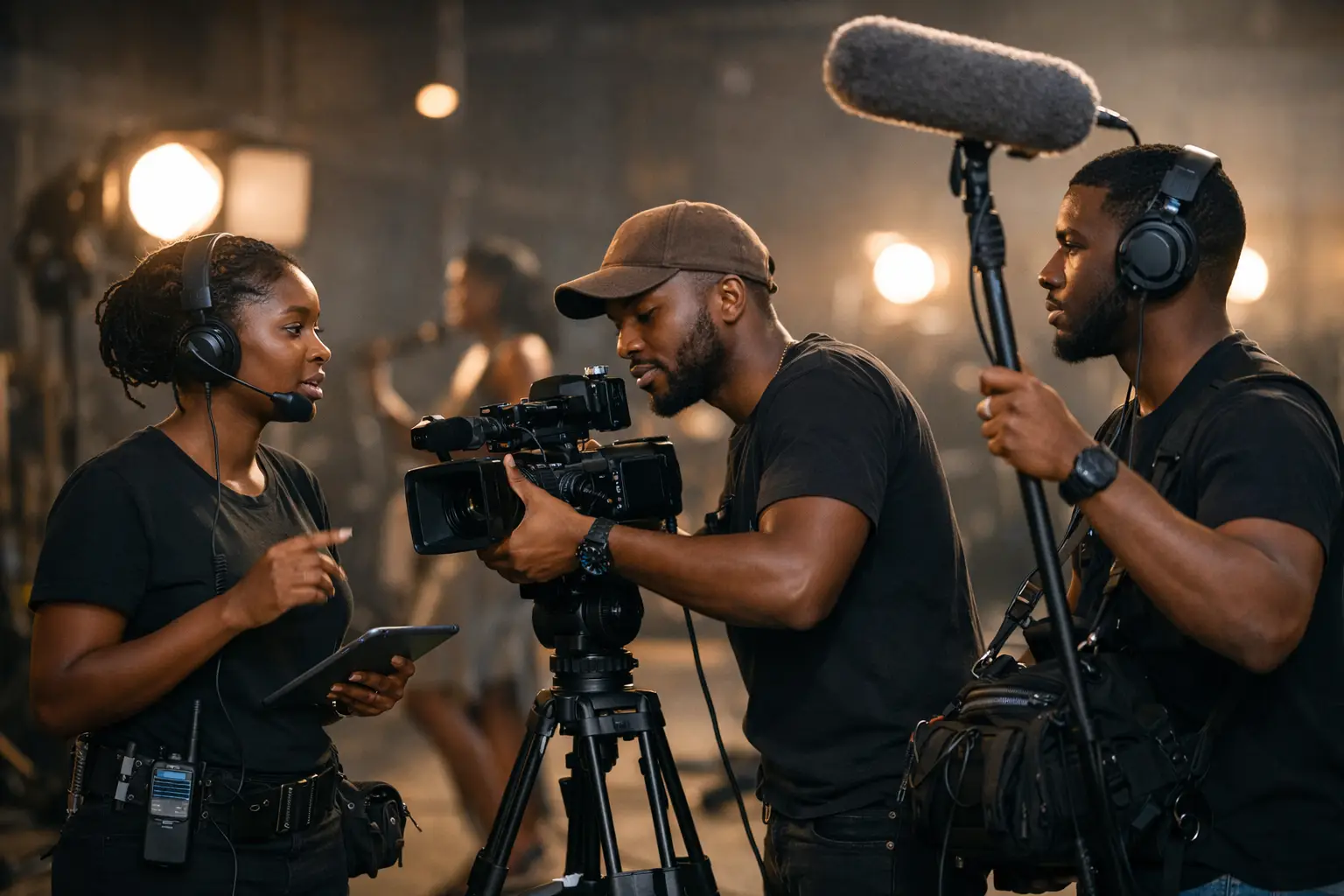
A production rarely slows down because of one bad idea. More often, it slips because nobody is fully clear on who owns what. That is why backstage crew roles explained in plain language matters so much – especially when you are hiring fast, stepping into your first crew job, or scaling from small content shoots to more complex productions.
For project owners, role clarity protects time, budget, and quality. For freelancers, it protects reputation. The more precisely you understand the backstage team, the easier it is to hire the right people, apply for the right jobs, and avoid the kind of overlap that causes missed cues, duplicated effort, or expensive gaps on set.
Why backstage crew roles explained matters on real productions
Backstage crew is a broad label, but production work is not broad in practice. Every role has a lane, a set of expectations, and a place in the chain of communication. On a lean shoot, one person may cover multiple functions. On a larger set, those same functions may be separated across entire departments.
That is where confusion starts. A producer might think a production assistant can handle coordination that really belongs to the assistant director team. A new freelancer may call themselves a grip when they mostly assist with general setup. Neither mistake is harmless. Titles shape trust, rates, scheduling, and accountability.
When roles are defined well, the set runs cleaner. Crew members know who reports to whom. Department heads know what support they have. Clients and producers know who to contact when a problem hits. This is not just industry jargon. It is production control.
The core backstage crew roles explained by department
The easiest way to understand backstage work is by department rather than by one long role list. Most productions group crew around planning, camera, lighting, sound, art, wardrobe, and operational support.
Production and set coordination
The producer is usually responsible for the bigger picture – budget, staffing, logistics, approvals, and delivery. On some projects, especially branded content or smaller digital shoots, the producer is also heavily involved in schedule management and vendor coordination.
The production manager or line producer often handles the practical engine room of the job. This role tracks costs, crew bookings, schedules, and operational details. If the producer sets the direction, the production manager helps make sure the machine actually moves.
The assistant director, often called the AD, keeps the set on schedule. This role is deeply tied to timing, call sheets, movement, and on-set order. The AD is not the creative director of the piece, but they are often the person making sure the day does not collapse. On larger productions, first AD and second AD responsibilities split between on-set control and off-set coordination.
Production assistants support wherever needed. That sounds simple, but it depends heavily on the project. A PA may help with talent movement, paperwork, lockups, runs, or crowd support. The role is useful, but it should not become a catch-all replacement for specialized crew.
Camera department
The director of photography, or DP, leads the camera and lighting vision in collaboration with the director. This role shapes framing, lensing, exposure, and overall visual execution. On smaller shoots, the DP may also operate camera.
The camera operator physically handles the camera during takes when that responsibility is separate from the DP. The first assistant camera, often called the 1st AC or focus puller, manages lens changes, focus, and camera readiness. The second assistant camera supports with slating, media handling, and setup support.
Where productions get mixed up is assuming every camera team member is interchangeable. They are not. A strong operator is not automatically a strong focus puller, and a general videographer may not fit a structured multi-role camera department.
Lighting and grip
The gaffer leads the electrical and lighting execution based on the DP’s vision. This role turns visual intent into actual fixtures, power planning, and lighting setups. The best gaffers are technical problem-solvers who work fast under pressure.
The key grip manages rigging, light shaping support, camera support equipment, and physical setup tools that affect how scenes are controlled. Grips are less about the electrical side and more about the hardware, movement, and structural side of the image.
On smaller productions, people often blur grip and lighting roles. That can work when the crew is experienced and the scope is contained. It becomes risky when safety, rigging complexity, or tight time windows enter the picture.
Sound department
Good audio saves productions every day, usually without getting enough credit. The production sound mixer is responsible for recording clean sound on set and managing the sound workflow during the shoot.
The boom operator works closely with the mixer, placing microphones accurately while staying out of frame and adjusting to blocking changes. On very small shoots, one person may do both jobs. On dialogue-heavy scenes or multi-talent setups, splitting the roles usually gives better results.
A common hiring mistake is treating sound as a side task for camera crew or content assistants. That may work for scratch audio or simple social clips, but not for interviews, scripted scenes, or polished branded work where clarity matters.
Art, wardrobe, hair, and makeup
The production designer or art director shapes the physical world of the project – set look, props, dressing, and visual consistency. On some shoots, especially commercial and fashion work, this department carries major storytelling weight.
Set dressers and prop assistants help execute the environment. Their work can look invisible when done well, which is usually a sign it is working.
Wardrobe stylists manage clothing selection, looks, continuity, and fit. Hair and makeup artists prepare talent for camera while supporting the visual direction of the production. These roles matter even more than many first-time producers expect. A strong image can be undercut quickly by poor styling continuity, mismatched wardrobe, or makeup that does not suit the lighting setup.
Where backstage crew roles overlap
If you work across music videos, short films, fashion campaigns, creator shoots, and event coverage, you already know titles can shift. A lean digital production may hire a shooter-editor who lights, directs, and captures audio references. A larger commercial set may separate those functions across ten or more crew members.
That does not mean titles are meaningless. It means context matters. Role overlap is normal when scope, budget, and crew size demand it. The key is being honest about what one person can do well without creating hidden risk.
For freelancers, that means listing your actual strengths instead of inflating your title. For project owners, it means asking what a crew member truly handles in practice. Someone can be multi-skilled and still need support.
How to hire the right backstage team
The smartest hiring starts with the production itself, not with random crew titles. Ask what the shoot needs technically, logistically, and creatively. A studio interview day needs a different crew shape than a night exterior, a runway show, or a branded lifestyle campaign with multiple talent changes.
Next, define who owns each outcome. Who controls schedule? Who manages sound? Who is responsible for media? Who handles continuity in styling? Once ownership is clear, role titles become easier to assign.
Then look at scale. A small project may combine producer and production manager, or camera operator and DP. That is fine when the scope supports it. Problems show up when a project is staffed like a small shoot but expected to deliver like a large one.
This is where specialized marketplaces can make a real difference. Instead of searching role by role across fragmented channels, project owners can move faster when backstage crew, creative talent, experts, and production support sit in one hiring ecosystem. That is especially useful in fast-moving creative markets like Nigeria, Kenya, South Africa, and Ghana, where production volume is growing and reliable crew discovery matters.
If you want to work backstage, start with the right lane
For emerging crew, the best next step is not calling yourself everything. It is finding your niche. Learn the department you want to grow in, understand the workflow around it, and build credits that match the role you want more of.
If you are drawn to pace and coordination, production support may fit. If you are technical and detail-focused, camera, grip, or sound may be stronger lanes. If your strength is image-building, wardrobe, art, or hair and makeup could be the better path.
There is also real value in starting adjacent to your target role. A production assistant can grow into coordination. A camera trainee can move toward AC work. A styling assistant can develop into wardrobe leadership. Early career momentum often comes from proximity, consistency, and being clear about what you are there to learn.
Backstage crew roles explained for better teamwork
The strongest productions are not built on impressive titles alone. They are built on clear responsibilities, realistic staffing, and people who know how their work connects to the full production chain.
That clarity helps everyone. Producers hire with fewer gaps. Freelancers pitch themselves more accurately. Departments collaborate with less friction. And when pressure hits, which it always does, the team can respond without guessing who is supposed to take charge.
If you are building a crew or building your career, get specific early. The right role fit does more than fill a position – it gives the whole production a better chance to run like it should.
Leave your comment
You must be logged in to post a comment.