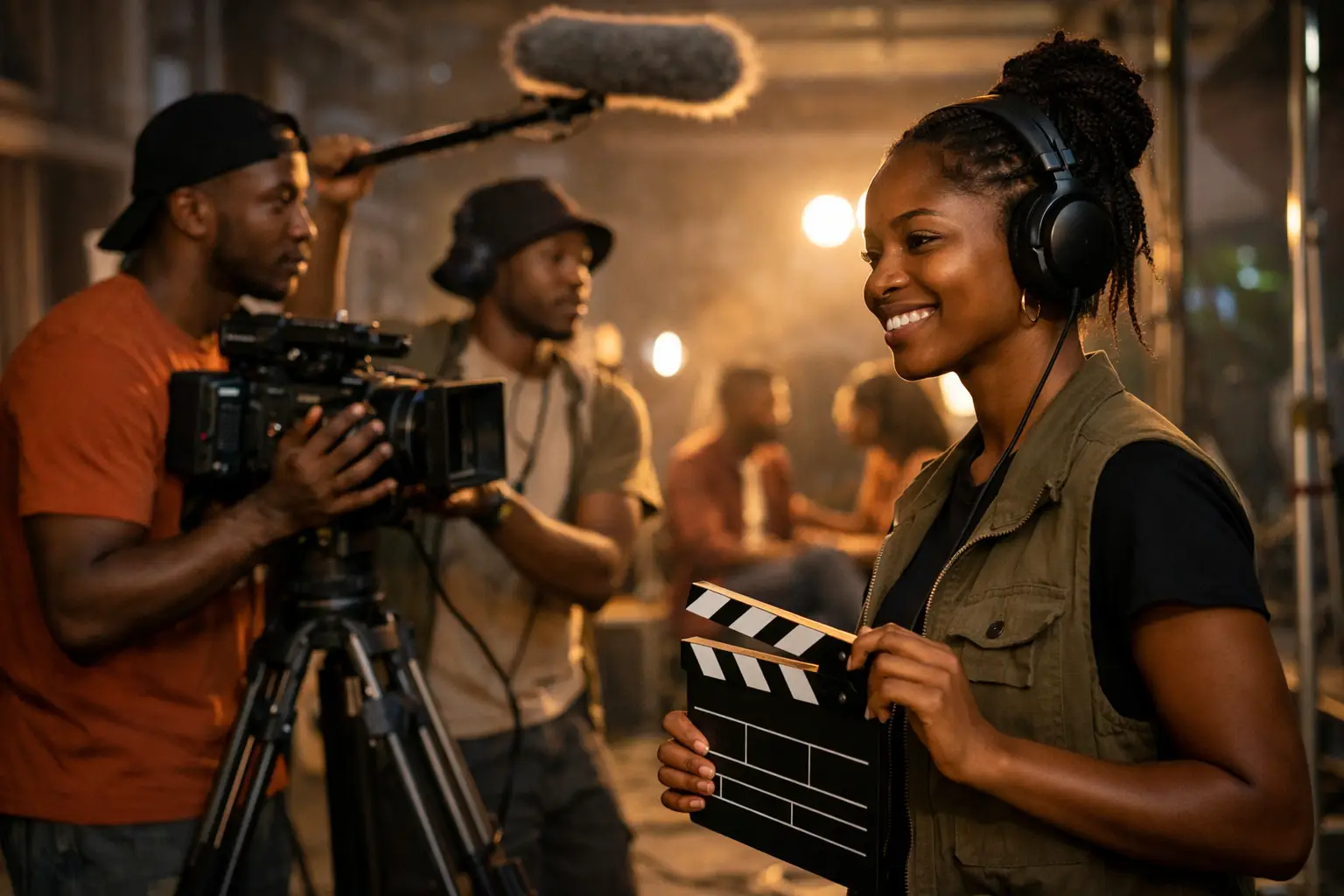
The first paid day on set usually starts before sunrise, with someone asking for gaffer tape, call sheets, or coffee before you have figured out where to stand. That is why backstage film jobs for beginners matter so much. They give you a real entry point into production, not as a spectator, but as part of the team that keeps the day moving.
If you want to work in film but you are not trying to start in front of the camera, there is good news. Film sets run on specialists, assistants, coordinators, and support crew. Many of those roles are open to newcomers who show up prepared, stay useful under pressure, and understand that small responsibilities often lead to bigger trust.
Which backstage film jobs for beginners make the most sense?
The best first role depends on how you like to work. Some beginners are highly organized and thrive near paperwork, schedules, and moving parts. Others are more technical and want to be close to cameras, lights, sound, or post-production. The smartest move is not chasing the title that sounds glamorous. It is finding the function that matches your strengths.
Production assistant is the most common entry point, and for good reason. PAs support the production wherever needed. One day that may mean managing lockups, guiding extras, distributing paperwork, helping departments stay on schedule, or running pickups. It is not glamorous work, but it gives you a wide-angle view of how a set actually operates. If you are reliable, calm, and fast to learn, this role can open doors quickly.
Runner roles are similar, especially on smaller shoots, branded content, music videos, and independent productions. A runner may handle errands, basic setup help, hospitality, and general support. On lean crews, that can turn into valuable exposure across departments. The trade-off is that small productions can be less structured, so you may need to learn on the fly.
If you are interested in visuals, camera trainee or camera assistant support roles are worth tracking. These roles often start with equipment prep, battery management, lens handling support, slate support, and helping keep camera workflow organized. You do not need to be a cinematographer on day one, but you do need discipline. Camera departments value precision and trust.
Art department assistant is a strong path if you notice detail, props, set dressing, continuity, and visual storytelling. Beginners in art support may help source items, move set pieces, organize props, prep spaces, and assist with strike. This role suits people who are practical, resourceful, and visually tuned in.
Wardrobe, hair, and makeup support roles can also be beginner-friendly when attached to experienced department leads. These jobs are ideal if you already have some related skill and want production experience. The key difference is that these departments often expect at least a basic portfolio or training background before they bring someone in.
Post-production assistant roles are another route that gets overlooked. If you are more comfortable in editing suites than on active sets, assisting with media organization, file naming, logging footage, syncing, exports, and workflow tracking can be a smart start. It is less visible than set work, but it is still critical production labor.
What employers actually look for in beginners
Most hiring decisions at entry level come down to risk. Producers and department heads are asking a simple question: will this person make the day easier or harder?
Experience helps, but it is not the only thing that matters. Beginners get hired because they are reachable, punctual, clear in communication, and willing to do unglamorous work without acting above it. On a working set, attitude is not a soft skill. It is operational value.
You also need to understand the pace. Film crews work on deadlines that cost real money. If a call time is 6:00 a.m., arriving at 6:00 is late. If someone gives you a task, they are not looking for a long explanation about why it is difficult. They are looking for a solution, or at minimum a fast update.
That does not mean you need to pretend to know everything. In fact, beginners earn more respect by being honest about what they do not know and learning quickly. The problem is not asking questions. The problem is asking the same question twice because you were not paying attention the first time.
Skills that help you get hired faster
You do not need film school to start, but you do need useful skills. Some are technical, and some are pure professionalism.
Communication matters in every backstage role. Can you take instructions clearly, repeat key details back, and keep messages concise? That alone separates stronger beginners from weaker ones. Organization matters too. Call sheets, gear checklists, continuity notes, release forms, and file naming systems are not glamorous, but productions fall apart without them.
Basic set etiquette is another advantage. Learn who the key departments are, when to stay quiet, how walkie protocol works, what a turnaround means, and why chain of command exists. A beginner who respects workflow is easier to trust than one trying to impress everyone at once.
If you are targeting a technical department, learn the basics before you apply. For camera, understand cards, batteries, slating, and equipment handling. For sound, know fundamental microphone types and set noise awareness. For art, understand continuity, dressing logic, and quick problem-solving. For post, know editing software basics and media hygiene.
How to land backstage film jobs for beginners
Start smaller than your long-term ambition. Many people say they want to work in film, but apply only for major productions or roles that require credits they do not have yet. A better strategy is to build momentum through student films, indie shoots, branded content, digital productions, event capture, fashion content, and short-form commercial work.
Your first goal is not a perfect credit. It is proof that you can work. That means a simple, professional profile, a clean resume focused on relevant skills, and a clear idea of what department you want to support first. If you try to be everything at once, you become harder to place.
When applying, keep your message short and production-minded. State the role, your availability, your relevant strengths, and any practical details like location flexibility or gear familiarity. If you have worked adjacent jobs in events, content creation, theater, photography, hospitality, logistics, or live production, include them. Many entry-level film skills transfer from other fast-paced environments.
Networking also works differently in production than many beginners expect. It is less about dramatic introductions and more about repeat reliability. If one coordinator remembers that you were early, useful, and easy to brief, that can lead to more calls than a stack of cold applications. Platforms built for creative hiring can help by making those opportunities and role categories easier to find in one place, especially when you are trying to move from interest into actual bookings.
Mistakes beginners make on set
The biggest mistake is treating entry-level work like it is beneath you. Every department notices that quickly. The second big mistake is confusing enthusiasm with disruption. Energy is great. Interrupting the workflow, touching gear without permission, or offering opinions in the wrong moment is not.
Another mistake is failing to prepare. You should know the call time, location, contact person, dress code, and basics of the production before the day starts. Bring what you need. Charge your phone. Pack a pen, notebook, water, and practical clothing. The less managing you require, the stronger your reputation becomes.
Beginners also sometimes chase proximity instead of usefulness. Standing near the camera does not make you part of the camera team. Hovering around decision-makers does not build trust. Being the person who handles assigned tasks well does.
Choosing a path that can grow with you
A first role is not a permanent label. Plenty of producers started as PAs. Editors started as post assistants. Stylists started in wardrobe support. The point of beginner roles is not to stay there forever. The point is to learn where your talent fits best.
After a few projects, patterns start to show. Maybe you are strongest in logistics and should move toward production coordination. Maybe you love gear and want the camera or lighting route. Maybe your eye for detail makes script supervision, wardrobe, or art department a better fit. Pay attention to the work that keeps your interest even when the hours are long.
If you are building your network in active creative markets such as Nigeria, Kenya, Ghana, or South Africa, this matters even more. Productions often move fast, and crews remember people who are both skilled and dependable. That creates real room for beginners who approach the industry as a business, not just a dream.
The film industry rarely hands out perfect starting points. More often, it rewards people who get in, stay ready, and keep stacking trust one day at a time. Find your niche, show that you can support the work, and let your first backstage role become the proof that you belong there.
Leave your comment
You must be logged in to post a comment.