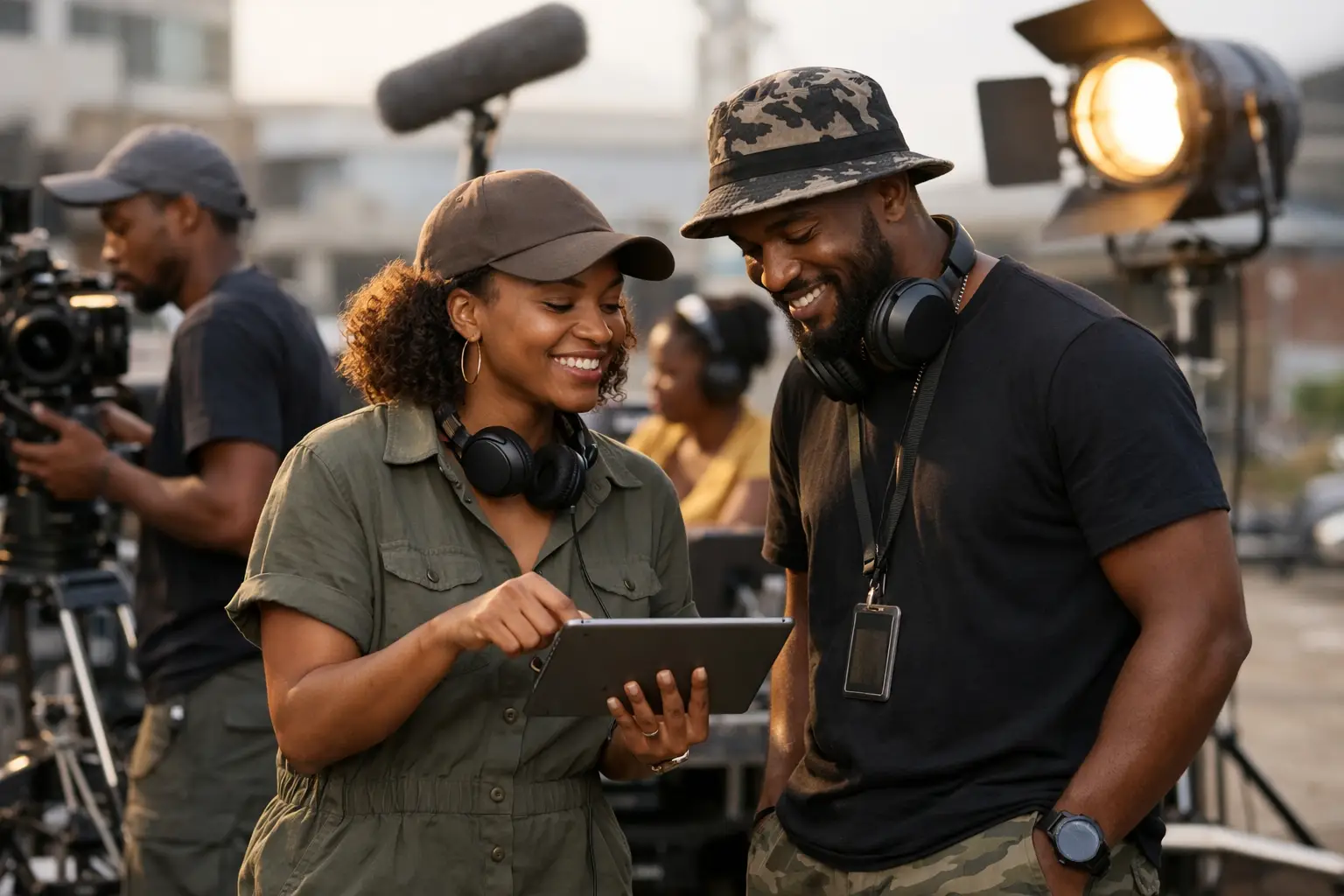
A production rarely falls apart because one person lacked talent. It usually slips when the wrong people were hired for the real job. A brilliant DP who is wrong for a fast-turn brand shoot, or a PA with no set discipline on a tight schedule, can cost more than a higher rate ever would. That is why knowing how to hire production crew starts with role fit, not just availability.
If you are producing a campaign, short film, livestream, fashion shoot, music video, or social content series, the goal is not to build the biggest crew. The goal is to build the right crew for the format, timeline, and pressure level of the project. Strong hiring decisions protect your schedule, your budget, and the quality of the final deliverable.
How to hire production crew without wasting budget
The fastest way to overspend is to hire reactively. Many project owners start by asking, “Who is free this weekend?” A better question is, “What does this production actually need to succeed?” Those are not the same thing.
Start with the production type. A branded content shoot may need a producer, director of photography, camera assistant, gaffer, sound recordist, makeup artist, production assistant, and editor. A talking-head interview may only need a lean crew with overlapping skills. A fashion editorial may require stronger styling and glam support than camera department depth. A live event capture may demand technical reliability over cinematic experimentation.
This is where trade-offs matter. Hiring multi-skilled freelancers can save money on smaller projects, but specialization usually pays off on more complex sets. A shooter-editor might be perfect for quick social content. That same person may become a bottleneck on a multi-location production with tight approvals and heavy post demands.
Before you post or contact anyone, define four things clearly: the scope of work, shoot dates, location, and expected deliverables. Then define what is fixed and what is flexible. If the deadline is immovable, prioritize crew with proven speed and set discipline. If visual quality is the main objective, prioritize stronger portfolio alignment. If budget is narrow, simplify the production plan before you underhire critical roles.
Build the crew around actual responsibilities
Titles in production can look familiar on paper and mean very different things in practice. One producer may be hands-on with logistics, crew calls, permits, and vendor coordination. Another may focus more on client communication and top-level oversight. If you hire by title alone, mismatched expectations show up fast.
Write role briefs based on responsibilities, not assumptions. Instead of saying you need a producer, spell out whether that person is expected to manage call sheets, coordinate rentals, confirm crew, supervise schedule, or handle client-facing updates. Instead of asking for a videographer, clarify whether you need camera operation only, lighting support, audio setup, directing interview subjects, or same-day selects.
The same rule applies to department heads and support crew. A gaffer on a commercial set is not interchangeable with someone who only knows lightweight creator setups. A production designer for narrative work may not be the best fit for a product-heavy e-commerce build. A first AC who thrives on cinema rigs may not be the right person for stripped-down run-and-gun coverage.
When you define responsibilities with precision, you attract better applicants and avoid paying for the wrong level of experience.
What to check before you hire production crew
Portfolios matter, but they are only one layer of the decision. Great reels can hide weak communication, inconsistent reliability, or poor fit for your production style. Hiring well means checking both creative ability and operational behavior.
Look at recent work, not just a highlight reel. You want evidence that the person can deliver in a format similar to yours. If you are shooting beauty content, check skin tone handling, lighting consistency, and framing choices. If you are hiring for branded interviews, review audio quality, pacing, and professionalism on set. If you are hiring an editor, ask whether they have worked inside revision-heavy client workflows rather than only passion projects.
Then assess responsiveness. Fast, clear communication before the job usually tells you how the working relationship will feel under pressure. Are they answering direct questions? Do they confirm availability clearly? Can they explain their process without vagueness? Production moves quickly, and unclear communication becomes expensive.
References are useful when the role is central or the schedule is tight. You do not need a full corporate process for every crew hire, but for key positions, ask previous clients or producers one simple question: would you hire this person again for the same kind of project? That answer often tells you more than a glowing testimonial.
Also check practical readiness. Do they own gear, need rentals, or prefer house equipment? Can they travel? Are they comfortable with your call times? Have they worked in your type of environment before, whether that means studio, location, event floor, or outdoor night shoot? Technical skill means less if the person cannot function in the conditions your production requires.
Rates, availability, and the real cost of a cheap hire
Every production has a budget ceiling, but chasing the lowest day rate often creates hidden costs. An underqualified hire can trigger delays, reshoots, overtime, missed shots, and post-production fixes. Those costs hit harder than a slightly higher crew rate.
The better approach is to think in value bands. For each role, decide whether you need entry-level support, mid-level reliability, or senior leadership. A production assistant does not need the same vetting intensity as a line producer. A social-first content day may support more emerging talent than a client-attended ad shoot.
Be direct about payment terms. State the rate, working hours, overtime policy, prep expectations, and whether meals, transport, lodging, or gear are covered. Crew members perform better when the deal is clear. Ambiguity creates friction before call time.
It also helps to separate must-have roles from nice-to-have roles. If budget is under pressure, protect the positions that affect quality and momentum most. On many shoots, that means production management, camera, lighting, sound, and post. If you have extra room, expand with art department, BTS capture, or additional support crew.
Where marketplace hiring changes the game
Traditional crew hiring can be slow because information is scattered. You ask around, wait for referrals, compare messages across apps, and still struggle to see the full picture of who is available and right for the job. Marketplace-based hiring works better when you need speed, category clarity, and access to specialists in one place.
For project owners balancing casting, crew, equipment, and creative support, this model reduces fragmentation. Instead of treating hiring as a chain of disconnected searches, you can build around the actual production workflow. That is especially useful when your project needs more than one type of support, such as crew, rentals, coaching, or location resources.
A platform like Fameidols Talent Network fits this shift because it is built around real production categories rather than generic freelance browsing. That matters when you are hiring people who need to operate inside specific creative roles, not broad service labels. The more precisely talent is organized, the faster you can move from discovery to booking.
For teams producing in fast-growing creative markets such as Nigeria, Kenya, South Africa, and Ghana, streamlined access to specialized crew and support services can also make regional production more practical. The value is not just convenience. It is execution speed with fewer gaps between planning and production.
Interview for pressure, not personality alone
A good crew interview is short and specific. You are not trying to impress each other. You are trying to confirm fit under real conditions.
Ask what kinds of productions they handle best. Ask about a time a schedule changed suddenly and how they adapted. Ask what they need from production to do their best work. If they are a department lead, ask how they manage assistants or coordinate with adjacent departments. These questions reveal more than generic confidence ever will.
You should also listen for self-awareness. Experienced crew know their lane. They can explain where they add the most value and where they prefer support. Be cautious with people who say yes to everything but clarify nothing.
When possible, share a concise brief before the call. Include the project type, dates, deliverables, estimated hours, location conditions, and expected crew size. Better information produces better hiring decisions.
The best crews are built before shoot day
Hiring is only half the job. Once you lock the crew, set them up to succeed. Confirm call times, contacts, addresses, parking or transport details, equipment plan, wardrobe or safety notes, and approval structure. Let department leads know who makes final decisions on set. Production runs better when authority is clear.
A crew that understands the creative goal and logistical plan can solve problems without constant hand-holding. That is where momentum comes from. Not from hiring the most famous freelancer in the room, but from aligning capable people around a realistic plan.
The strongest production teams are rarely accidental. They are cast with the same care as on-screen talent. Hire for fit, define the work clearly, and give good people what they need to execute. That is how projects move from stressful to solid, and from solid to standout.
Leave your comment
You must be logged in to post a comment.