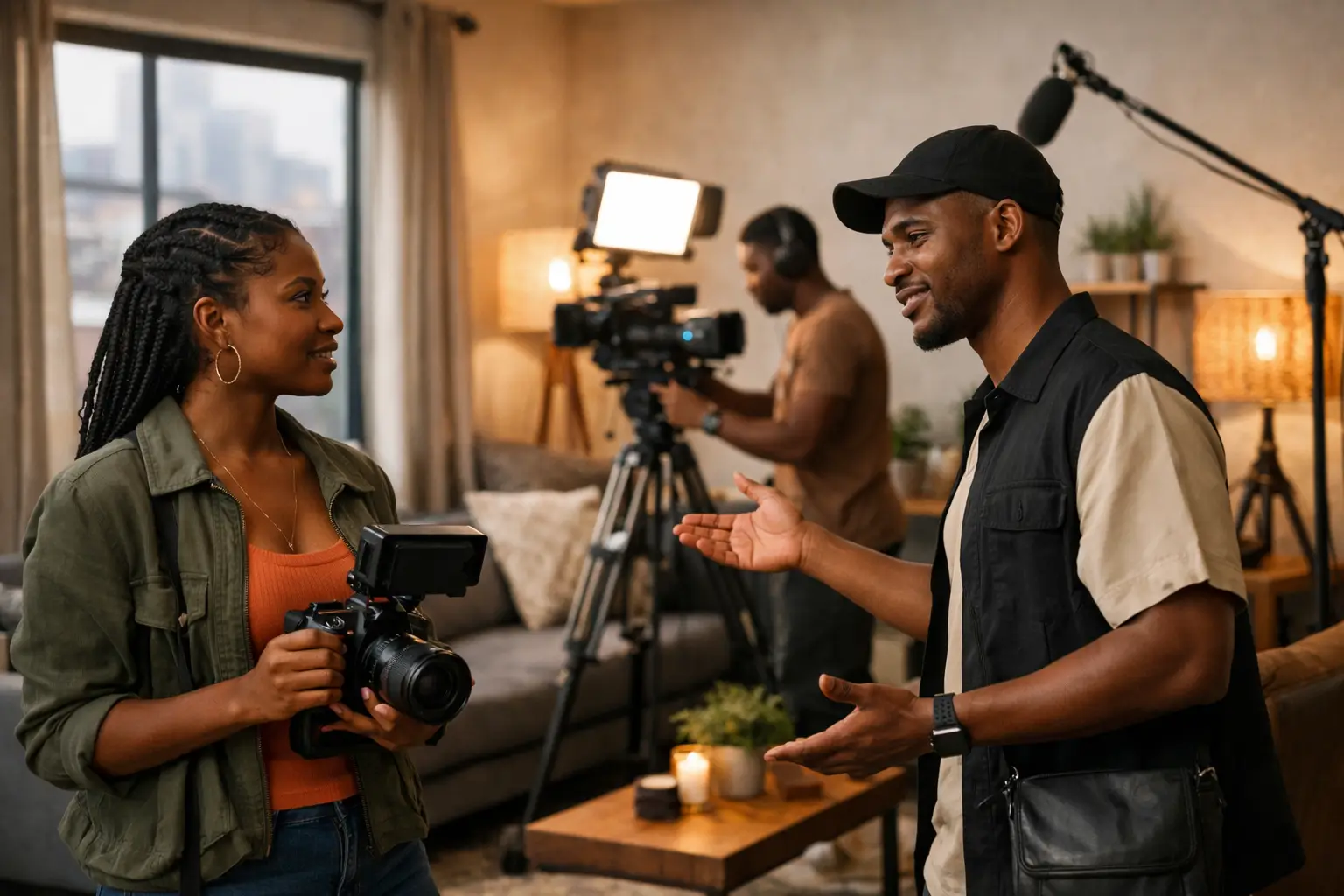
A location can make a simple product reel feel premium, give a music video its identity, or turn a creator interview into something audiences stop scrolling for. When you rent a filming location for content, you are not just paying for a room, rooftop, studio, or house. You are booking a production environment, with rules, timing, visual possibilities, and risks that can either support the shoot or slow it down.
For creators, producers, agencies, and brand teams, the strongest choice is rarely the most visually dramatic option. It is the location that looks right on camera while allowing your cast and crew to work efficiently. That balance matters whether you are producing a social campaign in Lagos, a fashion lookbook in Nairobi, a branded interview in Johannesburg, or a creator collaboration in Accra.
Start with the shot, not the venue
Before searching listings, define what the audience needs to feel when they see the finished content. A beauty campaign may need clean surfaces, controlled lighting, and a private prep area. A streetwear shoot may call for textured walls, bold architecture, or an industrial setting. A founder-led video might need warmth, quiet, and an environment that feels credible rather than overly staged.
Build a short creative brief around the footage you actually need. Include the format, such as vertical short-form video, long-form interview, campaign stills, or a music performance. Note the key scenes, expected camera angles, talent count, wardrobe changes, and any set dressing. This gives location owners enough context to tell you whether their space is suitable.
Photos can be misleading. A loft that appears large in a listing may be tight once lighting stands, a camera team, cases, and talent arrive. A café with beautiful natural light may be unusable during the hours you need because of noise or customer traffic. Ask for recent video walkthroughs, measurements, and clear images of entrances, stairways, restrooms, power outlets, and parking before you commit.
What to check when you rent a filming location for content
Visual fit gets a location onto the shortlist. Production fit should determine whether you book it. Think through the full working day, from crew call to wrap, rather than the first ten minutes of the final edit.
Access and load-in
Confirm exactly when your team can enter, when equipment can be delivered, and when the location must be fully cleared. A four-hour booking is not necessarily four hours of filming. If it takes 45 minutes to load in and another 45 minutes to restore the space, your usable shoot window is much smaller.
Ask whether there is an elevator, nearby parking, security check-in, and a direct route for cases, props, and large equipment. These details are especially valuable for productions with cinema cameras, lighting packages, clothing racks, or multiple set pieces.
Light, sound, and power
Natural light is an advantage only when it matches your schedule. Find out which direction windows face and whether surrounding buildings create harsh shadows or block light at certain times. For a controlled look, check whether windows can be blacked out and whether the owner allows mounting or temporary light control solutions.
Sound is often the hidden budget problem. Traffic, construction, generators, air conditioning, neighboring tenants, and public activity can ruin dialogue. If you are recording interviews, tutorials, podcasts, or scripted scenes, visit at the same time of day you plan to film. Silence in a listing photo tells you nothing.
Also ask about available power. Identify the number and placement of outlets, circuit capacity, and any restrictions on high-draw lighting. Bringing a qualified production electrician may be necessary for larger setups. It depends on your gear package, but guessing can lead to blown circuits and lost time.
Space for people, not just pictures
A functional filming location needs room for talent to prepare, crew to stage equipment, and clients to review the work without standing in the shot. Check whether there is a makeup area, changing space, seating, restrooms, Wi-Fi if required, and a secure place for valuables.
For a lean creator shoot, a single well-designed room may be enough. For a campaign with several models, a stylist, hair and makeup, camera crew, and client stakeholders, a visually beautiful but cramped location can become expensive quickly. Booking a slightly larger space may cost more upfront but save hours of resets and crowding.
Set a real location budget
The booking fee is only one part of the cost. Build your budget around the total location expense, including overtime, cleaning, security, parking, insurance, site representative fees, permits, deposits, and any equipment or furniture charges. If the space requires you to use its preferred staff, include that too.
Be clear about the nature of the project. A personal portfolio shoot, a small creator collaboration, and paid content for a national brand can have very different rates and usage expectations. Do not describe a commercial campaign as a casual shoot to secure a lower price. That approach can create disputes later, particularly when the content is used in advertising, paid social, broadcast, or multiple markets.
The best way to protect a tight budget is to schedule realistically. Add time for setup, lighting, talent arrival, breaks, weather delays for exterior scenes, and restoration. Overtime is often charged at a premium, and a rushed wrap can result in damage claims or missed shots.
Put permissions and usage in writing
A booking confirmation is not always a complete location agreement. Before payment, make sure both sides understand what you are allowed to film and how the finished work may be used. This matters most when content represents a brand, promotes a product, includes sensitive subject matter, or will remain online for years.
Your agreement should cover the filming date and hours, approved rooms or exterior areas, crew and talent limits, permitted equipment, noise restrictions, smoking and alcohol rules, cleaning expectations, damage responsibility, cancellation terms, and overtime rates. It should also state the intended usage of the material, including organic social posts, paid advertising, websites, television, print, or other channels if relevant.
If you plan to show trademarks, distinctive artwork, private homes, recognizable businesses, or people who are not part of the cast, pause and assess release requirements. Location permission does not automatically grant every right needed for commercial distribution. For higher-value campaigns, get legal guidance that matches the project scope.
Communicate like a production partner
Location owners are more likely to approve your request quickly when it is specific and professional. Share the shoot date, crew size, project type, hours, equipment needs, and whether you need sound recording, vehicles, smoke effects, animals, or altered furniture placement. Surprises are where trust breaks down.
Send a final production plan 24 to 48 hours before the shoot. It should name the on-site contact, include arrival instructions, list any agreed restrictions, and confirm the wrap procedure. Give your assistant director, producer, or lead creator responsibility for protecting the space. That person should photograph the condition of the location on arrival and after restoration, document any existing damage, and keep communication calm if an issue arises.
A respectful set is not just good etiquette. It improves your ability to rebook, negotiate future access, and receive referrals to other spaces. In creative production, reputation travels quickly.
Find spaces built for your kind of work
Generic property searches can produce options, but creative marketplaces help reduce the gap between a nice-looking space and a film-ready location. Look for listings that provide production details, clear availability, accurate capacity, owner expectations, and examples of past shoots. A marketplace designed around talent, crew, services, and rentals can also make it easier to coordinate the people and resources that turn a location into a finished production.
Fameidols Talent Network gives project owners a practical place to connect location needs with the broader production workflow, from crew and creatives to equipment and specialized support. The goal is not to book more resources than you need. It is to build the right working setup for the content you are making.
The location should earn its place in the production plan. Choose one that serves the story, protects the schedule, and gives your team enough room to do excellent work. When those pieces align, the space becomes more than a backdrop – it becomes part of why the content feels worth watching.
Leave your comment
You must be logged in to post a comment.