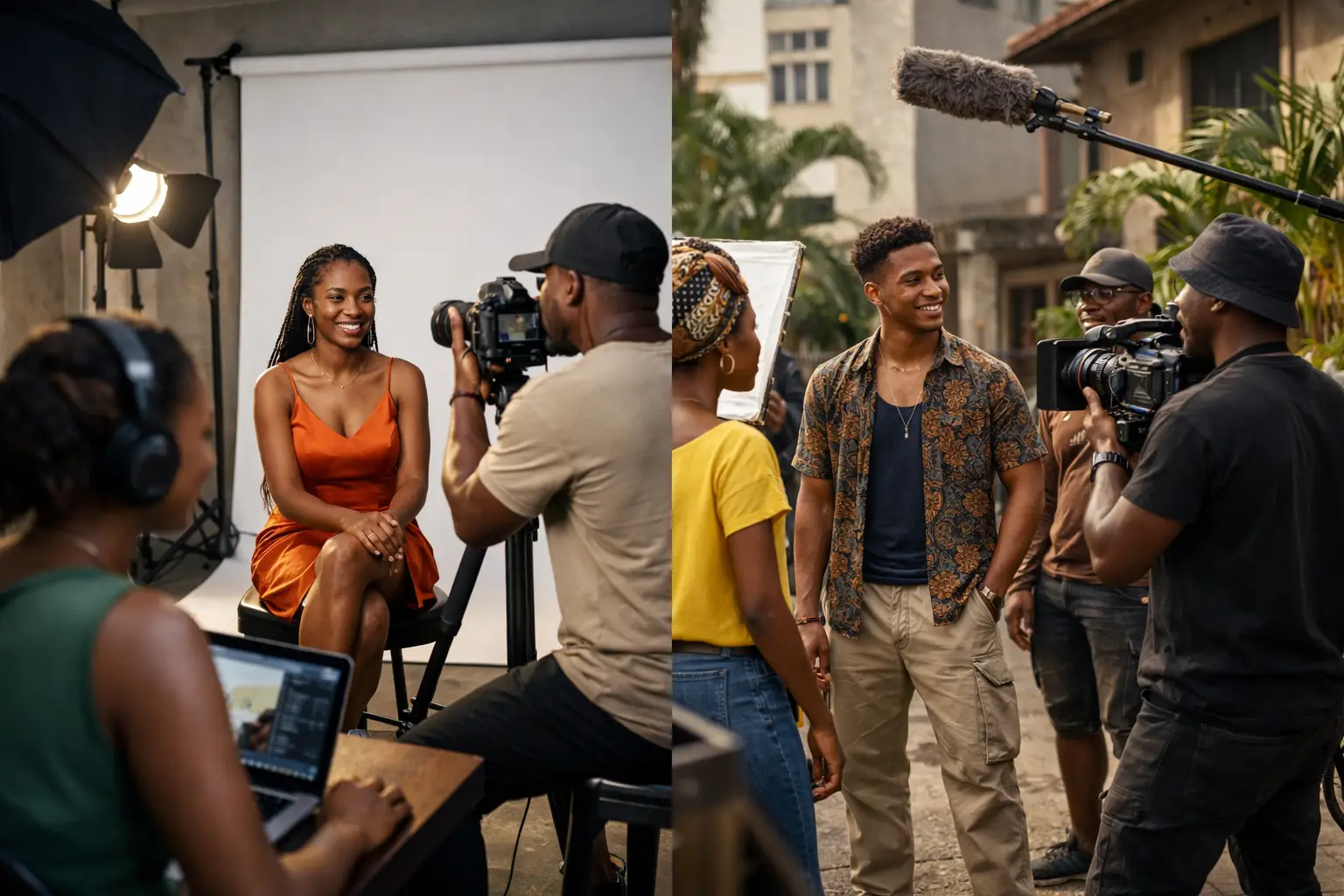
A beautiful space can sell a concept before the first line is delivered. It can also drain a production budget, create sound problems, or leave a crew waiting on a permit. The studio rental vs location rental decision is not simply about choosing a backdrop. It affects your schedule, crew size, lighting plan, insurance needs, client expectations, and the final story your audience sees.
For a product shoot, music video, fashion campaign, short film, or creator series, the right choice comes down to one question: do you need total control, or does the real world provide something you cannot recreate?
Studio Rental vs Location Rental: The Core Difference
A studio is a purpose-built production environment. It may offer a cyc wall, green screen, controlled blackout conditions, reliable power, changing rooms, makeup stations, equipment access, and spaces designed to keep a crew moving. You are renting consistency as much as square footage.
A location is a real place: a private home, restaurant, warehouse, rooftop, office, street-facing storefront, beach house, farm, or architectural landmark. Its value is character. Real textures, lived-in details, natural light, neighborhood energy, and a sense of place can make a production feel instantly more believable.
Neither option is automatically more professional. A studio can look flat if the creative direction is weak, while a location can look premium with the right camera, art department, and lighting team. The better choice is the one that supports the creative brief without introducing risks your production cannot absorb.
Choose a Studio When Control Is the Priority
Studio rental is usually the stronger choice when time is tight and the visual requirements need to be repeatable. A beauty campaign may need the same clean light for 30 products. An interview series may require matching frames across several episodes. A fashion e-commerce shoot may need multiple looks photographed efficiently without weather, traffic, or daylight changing the plan.
The biggest advantage is control over light and sound. In a properly equipped studio, your cinematographer or photographer can build the exact look the brief calls for and hold it throughout the day. That matters when a client needs consistent brand colors, precise skin tones, or footage that will be edited together over several shooting dates.
Studios also simplify production logistics. A crew can arrive with a clear setup plan, park equipment closer to the workspace, use dedicated prep areas, and work without negotiating around a property owner’s daily routines. For casting sessions, auditions, tabletop product videos, podcasts, and social content batches, this efficiency can be worth more than an impressive view.
Still, “controlled” does not mean “everything is included.” Ask whether the rental price covers lighting, grip gear, backdrops, furniture, air conditioning, generators, cleaning, security, overtime, and a studio assistant. A lower hourly rate can become expensive if every production essential is an add-on.
Studio rentals work especially well for repeatable content
If your team is filming ten creator videos, shooting a full collection, or producing a branded education series, a studio gives you a reliable base. You can create several sets inside one space, keep the gear package consistent, and focus the day on talent performance rather than location management.
This is also useful for emerging creatives building portfolios. A clean studio lets a photographer, model, makeup artist, stylist, and videographer collaborate around a clear concept. The space stays neutral, so the work can carry the visual identity.
Choose a Location When Authenticity Is the Asset
Location rental is the right move when the setting has a job to do in the story. A real boutique hotel can communicate luxury faster than a generic set. A working restaurant can give a food campaign texture, depth, and movement. A family home may make a lifestyle advertisement feel warmer and more credible than a styled studio corner.
Locations bring production value that is difficult to manufacture. Architecture, natural wear, local color, exterior access, gardens, window light, and practical spaces all add visual layers. For narrative work, documentary-style content, tourism campaigns, editorial fashion, and brand films, those layers can make the difference between footage that feels staged and footage that feels lived in.
But character comes with variables. You may have limited access hours, narrow staircases, poor cell reception, neighboring businesses, traffic noise, restrictions on furniture moves, or a property owner who does not understand the pace of a production day. A location that looks perfect in photos may have no usable power outlets, no restroom for talent, and no quiet room for audio.
Before booking, visit the site at the same time of day you plan to shoot. Listen for traffic, generators, construction, aircraft, music, and nearby crowds. Test cellphone reception, check the sun direction, measure doors and elevators, and confirm where the crew can park, unload, eat, change, and store cases. These details protect the schedule more effectively than an inspiring mood board.
Location rentals need stronger preproduction
A studio often starts with a production-ready framework. A location needs you to build that framework. The team may need permits, neighborhood notice, a location agreement, liability coverage, security, power distribution, cleaning, furniture protection, and a contingency plan for weather.
That does not make location work impractical. It means the producer must budget for the full operational picture. A small campaign with a five-person crew may work easily in a private home. A larger commercial with trucks, lights, cast, catering, and agency stakeholders requires much more coordination.
Compare the Costs Beyond the Day Rate
The cheapest rental is not always the least expensive production. Studio rates can appear higher because they include infrastructure that would otherwise require separate hires. Location fees can look affordable until permits, site management, transport, protection materials, security, and overtime are added.
Start with the shooting requirements, then price the resources needed to make each option work. If a location requires a generator, a sound plan, weather cover, and multiple vans, compare that total against a studio with power, blackout, parking, and equipment already available. If a studio requires an extensive build, prop rental, and art direction to imitate a real environment, the location may deliver better value.
Timing matters as well. Studio booking is often cleaner for half-day sessions and rapid turnarounds. Locations may have stricter minimum hours, access windows, or setup limitations. If talent can only work for a narrow window, choose the space that gives your crew the highest chance of being camera-ready on time.
Match the Space to Your Production Team
Your creative concept and your team capacity should agree. A solo creator shooting a quick product reel has different needs from a producer coordinating 20 crew members. Do not book a visually ambitious location if no one is assigned to manage permissions, arrivals, property rules, and unexpected issues.
Likewise, do not default to a studio simply because it feels safer. If your campaign needs street energy, natural interactions, or a recognizable local setting, a neutral room may work against the brief. The production team should decide together: director or photographer, producer, camera department, stylist, sound lead, and client when applicable.
For projects across Nigeria, Kenya, South Africa, or Ghana, local conditions can influence the choice even more. Travel time, seasonal rain, traffic patterns, power reliability, and permit processes vary by city and neighborhood. A local location manager or experienced crew member can identify practical concerns before they become shoot-day costs.
Questions to Answer Before You Book
Before confirming either space, get clear answers in writing. What are the exact access, setup, shoot, and wrap times? What equipment and facilities are included? Are there noise, lighting, smoking, parking, guest, or filming restrictions? Who is responsible for damage, cleaning, security, and overtime?
Also ask what happens if conditions change. Can you reschedule for weather? Is there a cancellation policy? Can the owner revoke access? Is there a backup power option? These questions may not feel glamorous, but they protect the creative work, the crew, and the client relationship.
A good rental provider understands that production is not a casual visit. They can explain the rules clearly, share accurate images and dimensions, and help you determine whether the space fits your crew and concept. On Fameidols Talent Network, project owners can approach studio and location sourcing as part of a larger production workflow alongside talent, crew, and specialist support.
The strongest choice is the space that lets your idea show up on camera without forcing the team to fight the environment all day. Book the control of a studio when precision drives the brief. Book the character of a location when the setting carries the story. Then put the saved energy where it belongs: into the people, performances, and details your audience will remember.
Leave your comment
You must be logged in to post a comment.