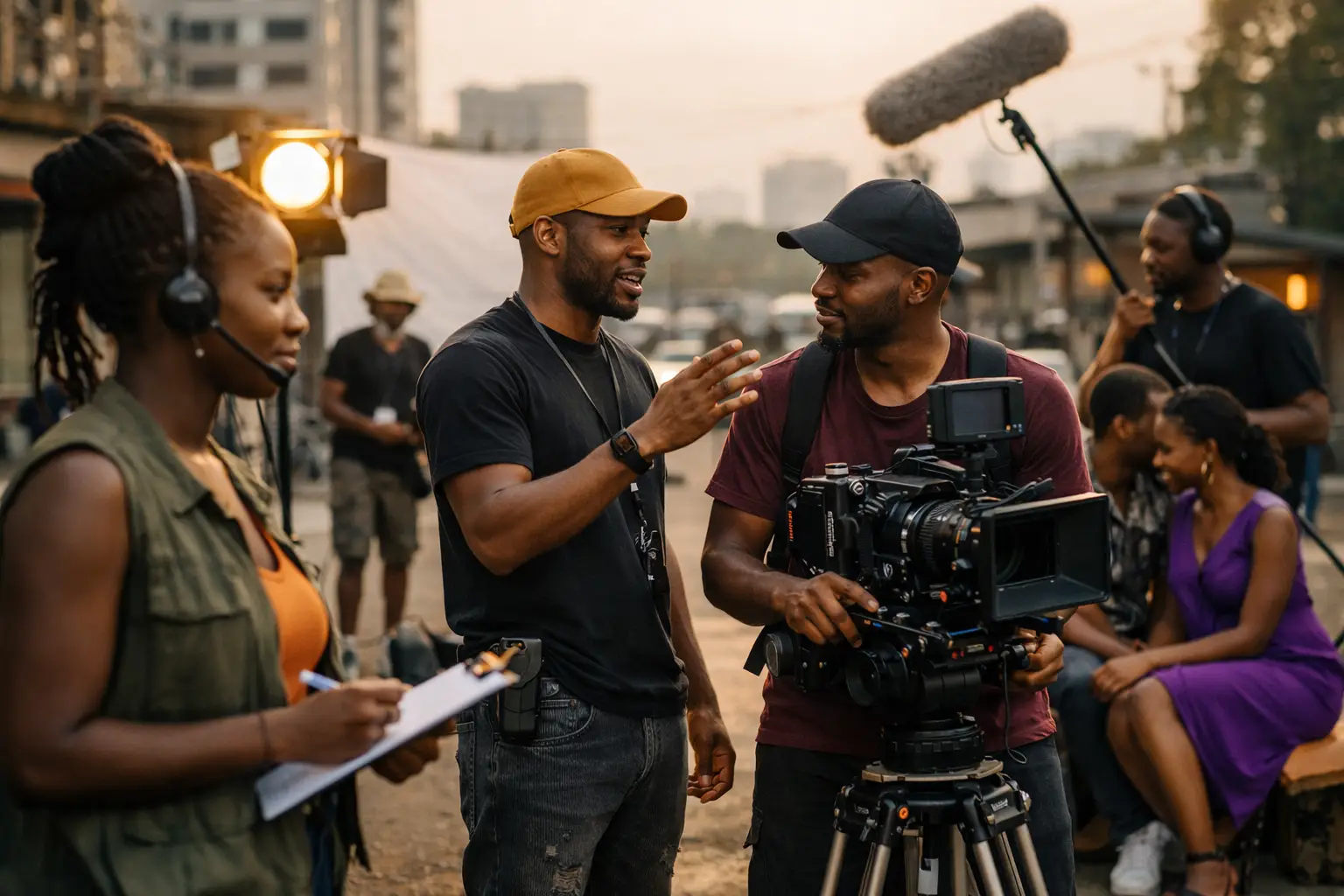
A call sheet can look complete and still hide the problem that sinks a shoot: the wrong people are assigned to the wrong pressure points. A strong film production staffing guide is not just a list of job titles. It is a practical plan for matching the size, pace, budget, and creative demands of your project with people who can deliver.
Whether you are producing a branded content campaign, a music video, a short film, or a feature, staffing decisions affect every department. The right crew protects the schedule, supports talent, solves problems before they become expensive, and gives the director room to focus on the work that appears on screen.
Start Your Film Production Staffing Plan With the Scope
Do not begin by posting every role you have ever seen on a film credit. Begin with the production reality. A one-day social campaign with two talent looks needs a very different team from a six-day narrative shoot with night exteriors, stunts, multiple locations, and a full art department.
Define the format, shoot days, number of locations, cast size, camera setup, lighting needs, wardrobe changes, sound requirements, post-production deliverables, and available budget. These details tell you which roles are essential, which can be combined, and where a specialist will save you time or risk.
For example, a lean interview shoot may work with a producer-director, director of photography, sound mixer, makeup artist, production assistant, and editor. Add a moving camera, a client village, several setups, or a tight turnaround, and that same project may need a first assistant camera, gaffer, grip, production coordinator, data wrangler, and dedicated client or agency support.
The goal is not to build the largest crew. It is to build a crew with enough coverage that no critical function is relying on one exhausted person improvising all day.
Build the Core Team Before Filling Specialty Roles
A production runs best when its leadership structure is clear early. These are the people who turn a creative idea into a workable plan and give every department a reliable point of contact.
Production leadership
The producer owns the practical framework: budget, hiring, permissions, contracts, insurance, schedules, vendors, and client expectations. On larger jobs, the line producer or production manager manages day-to-day spending and logistics, while a production coordinator handles paperwork, crew communication, travel, releases, and call sheet support.
The first assistant director is a particularly valuable hire for productions with a full cast, ambitious schedule, or complex location needs. They manage set flow, coordinate department readiness, keep the day moving, and help protect safety. If your director is also trying to manage crowd control, meal breaks, and timing, the project is likely understaffed.
Creative leadership
The director sets the performance, visual, and story priorities. The director of photography translates that direction into camera, lighting, lens, and movement decisions. For polished commercial or narrative work, their partnership shapes both the creative result and the efficiency of the shoot.
Bring in a production designer or art director when the environment is part of the story. Even a simple tabletop campaign can need prop styling, set dressing, color consistency, and a clear system for resets. If the visuals depend on clothing, hire wardrobe support early enough to source, fit, organize, and maintain continuity.
Staff by Department, Not by Assumption
The most common staffing mistake is assuming one experienced creative can absorb an entire department. Multi-skilled freelancers are valuable, especially on smaller productions, but combining roles has limits. The decision should be based on workload, technical complexity, and the consequences of a mistake.
Camera teams often expand first. A director of photography may operate camera on a small job, but demanding focus pulls, complex lens changes, or a high shot count can justify a first assistant camera. If you are shooting large volumes of footage or multiple cameras, a data wrangler can protect your media, maintain backups, and keep the camera team shooting instead of managing cards.
Lighting and grip needs depend on the visual brief and location. Natural-light content may only require a compact lighting package and a gaffer who can work quickly. Controlled studio lighting, night work, power distribution, large modifiers, or rigging require more hands and more technical oversight. Cutting this department too aggressively can create safety problems as well as flat-looking footage.
Sound is another area where false savings show up later. If dialogue matters, hire a qualified production sound mixer. A boom operator may be necessary for scenes with movement, multiple speakers, or difficult acoustics. Poor audio is rarely fixed by wishing for better post-production.
Hair, makeup, wardrobe, art, transportation, catering, and production assistants should scale with the number of talent, looks, locations, and logistics. A single makeup artist may be right for one on-camera guest. A cast of ten with quick changes needs a different plan.
Hire for Availability, Evidence, and Set Behavior
A beautiful portfolio matters, but it is only one part of a good staffing decision. Your best hire is someone whose capability matches the specific job, who is available for prep and shoot dates, communicates clearly, and understands how their role connects to the wider production.
When reviewing candidates, ask for relevant credits or work samples, not just general experience. A fashion photographer may be highly skilled yet not be the right fit for a sound-sensitive narrative set. An editor who excels at fast social cutdowns may not be the person for a long-form documentary with detailed story structure.
Before confirming a crew member, clarify their rate, day length, overtime terms, kit or equipment fees, travel requirements, prep expectations, and deliverables. For post-production roles, be precise about revision rounds, project files, turnaround times, music licensing, exports, captions, color, and sound mix responsibilities.
Set behavior deserves equal attention. Reliable crew members arrive prepared, protect the work, communicate early when an issue arises, and treat talent and colleagues professionally. In a creative industry built on collaboration, reputation travels quickly.
A specialized marketplace can shorten the search by helping you review talent, crew, coaches, and rental providers in one working environment. Fameidols Talent Network is designed for that kind of production workflow, especially when you need to move from casting and crew discovery to equipment, studio, or location planning without rebuilding your vendor list from scratch.
Set Clear Responsibilities Before the First Call Time
Hiring good people is not enough if everyone has a different understanding of who owns the work. Create a simple responsibility map during pre-production. It should answer who approves creative decisions, who controls spending, who manages talent communication, who handles releases, who calls for equipment, and who has authority to pause work for safety.
Department heads need the brief early. Share mood boards, scripts, shot lists, floor plans, location restrictions, brand guidelines, schedules, and client feedback with enough time for meaningful questions. Sending a vague deck the night before a shoot turns staffing into damage control.
The call sheet should do more than state where to be. Include addresses, parking instructions, contact details, call times, expected wrap, weather notes, safety reminders, wardrobe or equipment notes, and the day’s schedule. People work faster when they are not chasing basic information.
Budget for the People Who Prevent Delays
A low crew rate can become expensive if it creates missed shots, extended rental days, overtime, poor footage, or a reshoot. Look at the total production cost rather than judging each staffing line in isolation.
There are moments when a lean team is smart. A simple creator-led product video, for instance, may benefit from a compact crew that can move quickly and keep the atmosphere relaxed. But lean should not mean unclear. Decide in advance what can be simplified without compromising safety, quality, or the deliverable.
Spend more deliberately when the risk is high: child talent, complex stunts, drones, water work, animals, night shoots, remote locations, heavy equipment, or high-profile clients. These conditions require experienced specialists and a stronger operational layer. The trade-off is a higher upfront cost for fewer surprises and better protection for everyone involved.
Keep Staffing Flexible Through Wrap and Post
Your staffing plan should not end when the camera stops rolling. Confirm who is responsible for media handoff, backups, asset organization, edit notes, review approvals, final exports, and archiving. Many productions lose momentum because post-production responsibilities were treated as an afterthought.
Keep a short crew debrief after wrap, especially on multi-day projects. Note what slowed the day, what resources were missing, what worked well, and which people you would hire again. That record becomes a practical advantage on the next job.
The right team does more than fill positions on a call sheet. It gives your project momentum, protects the creative vision, and makes ambitious work feel possible. Staff with intention, communicate the plan, and give skilled people the conditions to do their best work.
Leave your comment
You must be logged in to post a comment.