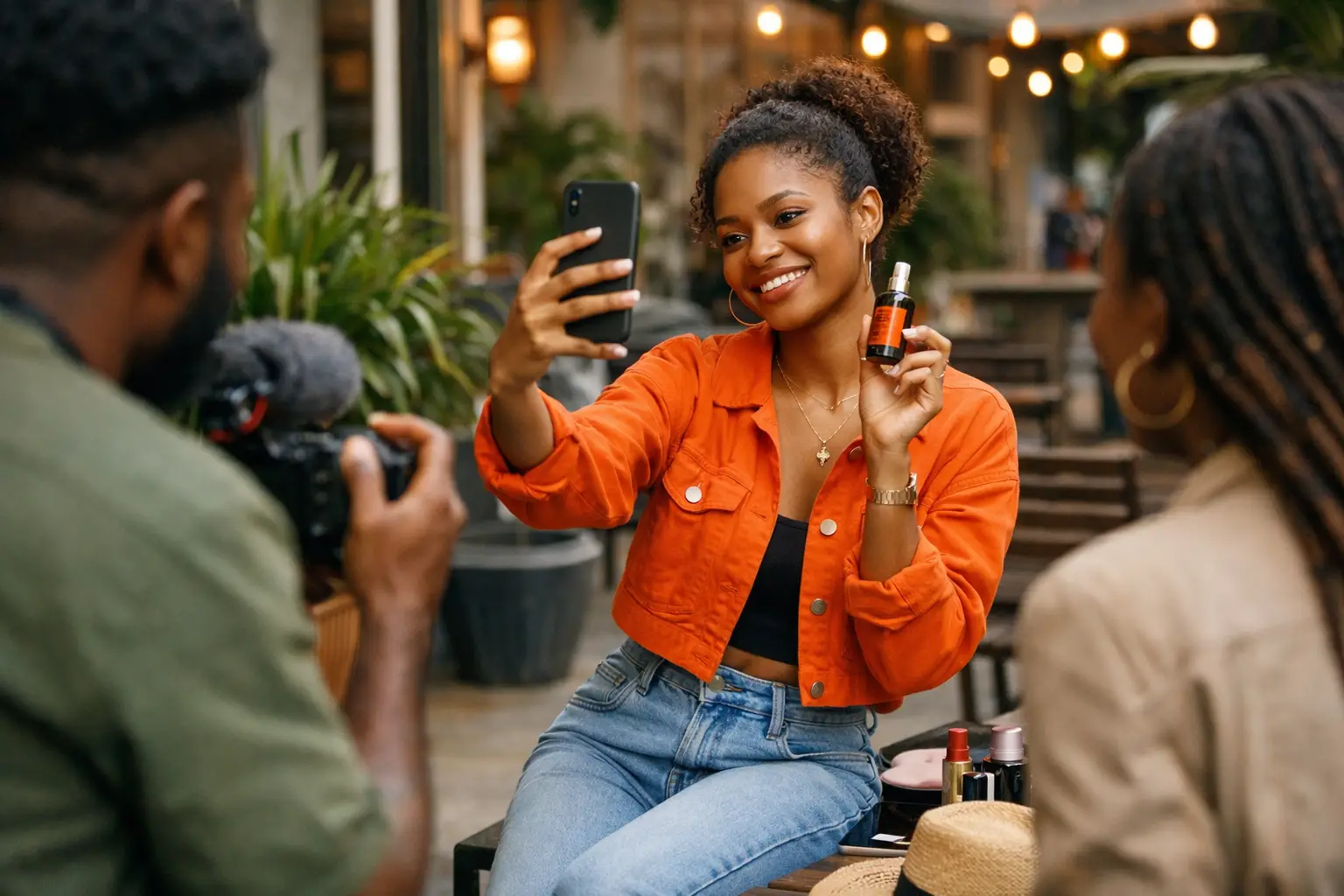
A campaign can look great on paper and still miss the people you actually need to reach. That usually happens when brands chase reach before relevance. If you want to book micro influencer for campaign performance, the better move is often smaller creators with tighter audience trust, clearer niche alignment, and content that feels native instead of forced.
Micro influencers are rarely the loudest option in the room. They are often the most useful one. For brand teams, producers, agencies, and creative founders, they can help turn a vague awareness push into something that feels specific, credible, and measurable.
Why book micro influencer for campaign goals
A micro influencer usually brings a more focused audience, stronger comment quality, and a better chance of fitting your brand voice without flattening it. That matters when your campaign needs action, not just impressions.
This is especially true for launches, local activations, niche products, creator-led ads, and culture-driven campaigns. A beauty brand targeting textured hair routines, a fashion label testing a new drop, or a production company promoting a casting-related initiative may get more traction from five aligned creators than one broad lifestyle account with weak audience intent.
There is a trade-off, though. Managing multiple creators takes more coordination. You need clear briefs, approvals, usage rights, payment terms, and realistic timelines. The upside is control. Instead of putting the whole campaign on one personality, you can spread risk across a set of creators who each speak to a specific audience segment.
Start with the campaign goal, not the creator count
Before you reach out to anyone, define what success actually means. If the goal is brand awareness, you may care about reach, saves, shares, and cost per thousand impressions. If the goal is conversions, you need to think harder about landing pages, trackable codes, creator-specific offers, and content formats that support intent.
This step sounds basic, but it saves money. Too many teams decide they need ten influencers before they decide what the campaign is trying to do. A smarter approach is to match creator selection to the campaign job. One micro influencer might be enough for a local event. A product seeding wave might need fifteen. A new market entry might call for creators across different niches, cities, or audience demographics.
Once the goal is clear, define the non-negotiables. That includes audience profile, content platform, category fit, posting window, and whether you need raw assets for paid usage. If you skip this, the booking process becomes subjective fast.
What to look for before you book micro influencer for campaign use
Follower count is the weakest screening tool. It gives you a quick range, but it tells you very little about influence quality. A better review combines audience fit, engagement pattern, creative style, and reliability.
Audience fit comes first. Look at who follows the creator, what questions they ask, how they respond to recommendations, and whether the community feels real. A creator with 12,000 followers in a tightly defined niche can outperform someone with 80,000 mixed followers and no clear audience behavior.
Then review engagement quality, not just engagement rate. Are people tagging friends? Asking where to buy? Referencing past recommendations? Real influence often shows up in conversation, not just likes.
Creative fit matters just as much. Some micro influencers are strong on polished video. Others are better at casual voice-to-camera content or story-led product demos. Match that to your campaign format. If you need creator content that can later support paid social, prioritize creators who can frame, light, and deliver clearly without heavy hand-holding.
Reliability is the quiet factor that saves campaigns. Check whether the creator posts consistently, follows through on brand work, and can communicate professionally. A creator can have the right niche and still be the wrong booking if deadlines are constantly missed.
How pricing really works
Micro influencer rates vary because the deliverable matters more than the label. One Instagram Story set is not priced the same way as a full short-form video package with usage rights and exclusivity.
Expect pricing to shift based on platform, audience niche, turnaround time, production effort, content ownership, and whether the brand wants paid media rights. A creator shooting a simple selfie-style story may quote modestly. A creator producing edited video with concept input, revisions, and ad usage rights should charge more, and fairly so.
This is where brands often miscalculate. They compare creator fees only by follower count and ignore the production value built into the deliverable. If the content can be repurposed across your campaign, the fee is not just for exposure. It is also for creative labor.
A practical budget should separate creator compensation from content usage, product cost, shipping, paid amplification, and coordination time. If you bundle everything into one vague number, negotiations get messy and expectations drift.
Write a brief that creators can actually execute
A strong brief gives direction without suffocating the creator’s voice. That balance matters because micro influencer campaigns work best when the content still feels like the creator.
Start with the campaign objective, target audience, key message, and required deliverables. Then explain the boundaries. Mention any mandatory talking points, visual requirements, posting dates, approval process, brand safety concerns, and prohibited claims.
Keep the language practical. Instead of saying, “Make it engaging,” tell them what success looks like. Do you want a product demo, an honest first-impression video, a styling concept, a testimonial angle, or attendance at a live activation? The clearer the job, the better the output.
It also helps to separate must-haves from nice-to-haves. If every line in the brief feels mandatory, creators will either overproduce or flatten their style to avoid mistakes. Neither outcome helps performance.
Contracts, rights, and campaign protection
If you are serious enough to book talent, you should be serious enough to document the agreement. This is not about making the relationship stiff. It is about protecting timelines, deliverables, and usage expectations on both sides.
Your agreement should cover payment amount, payment timing, deliverables, posting dates, revision terms, disclosure requirements, cancellation terms, content ownership, and ad usage rights. If you plan to whitelist or run the creator’s content as paid media, put that in writing from the start.
Exclusivity needs care. A short exclusivity window within a narrow category may be reasonable. A broad restriction across multiple categories for a low fee usually is not. Good creator relationships hold up when the terms are commercially fair.
For regulated industries or sensitive claims, build in legal review before content goes live. It is slower up front, but much cheaper than pulling a campaign after launch.
Managing multiple creators without losing momentum
The operational challenge in micro influencer marketing is coordination. Once you move beyond one or two bookings, the process can start to drag unless you organize it like a production.
Treat the campaign as a workflow with stages: sourcing, shortlisting, outreach, negotiation, contracting, briefing, content review, posting, reporting, and payment. That gives everyone visibility and cuts down on last-minute chasing.
This is also where a specialized marketplace helps. Instead of patching together outreach across DMs, emails, talent spreadsheets, and freelance contacts, project owners can move faster inside a network built for discovery and booking. On a platform like Fameidols, that matters because campaigns often overlap with other production needs such as content creation, crew hiring, coaching, or rentals. When the campaign sits inside a broader creative workflow, execution gets cleaner.
Common mistakes that weaken results
The first mistake is hiring for aesthetics alone. A beautiful feed does not guarantee audience trust or campaign fit.
The second is over-scripting. If the post sounds like a brand memo, performance usually drops. Micro influencers are valuable because they translate your message into their own language.
The third is expecting premium content, paid rights, rush turnaround, and category exclusivity on a bargain budget. Experienced creators notice when the ask is out of balance.
The fourth is judging results too quickly. Some campaigns drive direct action fast. Others build familiarity that improves performance over several creator touchpoints. It depends on the product, price point, and audience readiness.
What strong campaigns have in common
The best campaigns usually start with a tight match between audience, creator, and job to be done. They give creators enough room to stay believable. They define usage rights early. And they measure performance against the actual objective instead of chasing vanity metrics after launch.
If you are running campaigns across growing creative markets, this becomes even more valuable. In places like Nigeria, Kenya, South Africa, and Ghana, audience trust and cultural fit can make a major difference in how content lands. Smaller creators with strong local relevance often carry more weight than bigger accounts with weaker community connection.
Booking well is less about finding the cheapest creator or the biggest profile. It is about finding the right voice for the right audience at the right moment. When you treat micro influencer booking as part of campaign strategy, not just outreach, you give the work a real chance to perform.
The smartest next move is simple: define the result you need, shortlist creators who already speak to that audience, and book with enough clarity that great content has room to happen.
Leave your comment
You must be logged in to post a comment.