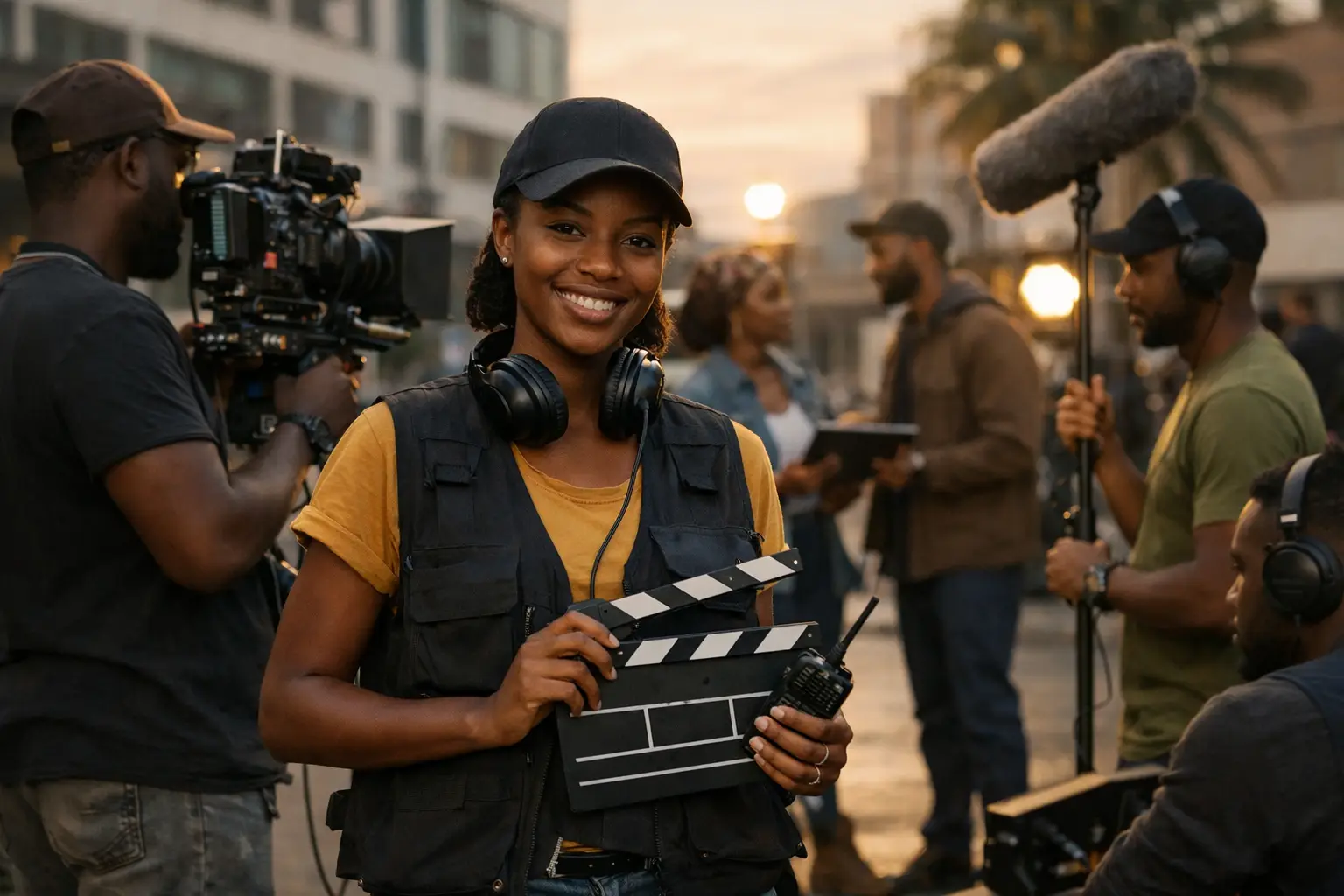
A production can have a great script, talented cast, and a clear creative vision, yet still fall apart without the people who make the work happen behind the camera. Film crew jobs are where planning becomes call sheets, lighting setups, clean audio, controlled locations, organized footage, and a final cut that is ready to deliver. For creatives, they offer a practical route into the industry. For project owners, hiring the right crew is one of the biggest determinants of whether a shoot stays on schedule and on budget.
What Film Crew Jobs Actually Cover
Film crew work is not one career path. It is a network of technical, logistical, and creative roles that change based on the scale of the project. A short-form social campaign may need a producer, cinematographer, sound recordist, editor, and makeup artist. A commercial, music video, documentary, or feature production may require entire departments working under department heads.
Camera roles include directors of photography, camera operators, focus pullers, camera assistants, and data wranglers. Lighting and grip teams handle the tools that shape an image and make equipment placement safe. Sound departments record dialogue, manage microphones, and reduce the problems that are expensive to fix in post-production.
Then there is the production office and set operations side: line producers, production managers, production coordinators, assistant directors, location managers, production assistants, wardrobe teams, makeup artists, art department crew, drivers, and caterers. Post-production creates another lane for editors, colorists, sound designers, motion graphic artists, VFX specialists, and production assistants.
The key is to avoid treating “crew” as a generic category. Find your niche. The best opportunities come when people can quickly understand the value you bring to a production.
Choose a Department Before You Chase Every Gig
Early-career crew members often apply to every listing they see. That can help you gain exposure, but it can also create a scattered portfolio. A camera assistant applying for sound work, art department tasks, and editing jobs may look flexible, but they may not look hire-ready for any one role.
Start by selecting a primary department based on your existing strengths, the work you enjoy, and the tools or training you can realistically access. If you love visual storytelling, camera, lighting, art direction, or editing could be a fit. If you are highly organized under pressure, production coordination or assistant directing may be more natural. If you are detail-focused and technically minded, sound, data management, color, or post-production operations can offer strong career paths.
That does not mean you must stay in one lane forever. Many excellent producers began as production assistants, and many directors of photography started by assisting camera teams. The point is to give employers a clear reason to call you first.
Entry-level roles can build serious momentum
Production assistant jobs are a common entry point because they expose you to the pace and hierarchy of a working set. The work can be demanding: managing walkie-talkies, handling runs, preparing paperwork, supporting crew movement, and solving small problems before they become larger ones. It is not glamorous, but a reliable production assistant is remembered.
Other accessible starting points include camera trainee, runner, wardrobe assistant, art department assistant, location assistant, editing assistant, and social content production assistant. The right entry-level role depends on the size of the production and how clearly the team defines responsibilities.
Build a Profile That Makes Hiring Easier
A crew profile is not a biography. It is a hiring tool. Producers and coordinators often review candidates quickly, especially when a shoot is approaching. They need to know what you do, where you can work, what experience you have, what equipment or software you use, and whether you can meet the production’s timing.
Lead with a role-specific headline, such as “Freelance Boom Operator and Location Sound Recordist” or “Production Assistant for Commercial and Digital Shoots.” Follow it with a short description that states your experience and working strengths. Be specific about the type of sets you know: branded content, interviews, music videos, live events, documentaries, narrative shorts, or fashion shoots.
Your credits should be clear and relevant. Include the project type, your position, and the outcome where appropriate. “Edited a six-part branded video series” tells a client more than “Worked on videos.” If you are still building credits, showcase practical evidence of your ability: a clean showreel, sample call sheet, behind-the-scenes work, organized project files, or a short portfolio of finished edits.
Availability matters too. If you can travel, work weekends, support overnight shoots, or bring approved equipment, say so accurately. Never overstate skills or claim access to gear you cannot provide. A production can work around a limitation when it is disclosed early. It is much harder to recover when a crew member arrives unprepared.
How to Apply for Film Crew Jobs With Intent
A fast application is useful only if it gives the hiring manager confidence. Read the full brief before responding. Look for the role, location, shoot dates, call-time expectations, required experience, equipment needs, rate structure, and deliverables. If the listing calls for a driver with a valid license or a sound recordist with a wireless kit, address that requirement directly.
Keep your message short, relevant, and professional. State the role you are applying for, explain why your experience fits, confirm availability, and point to the most relevant sample or credit. A producer does not need a long life story while staffing a shoot. They need to know whether you can do the job well.
It also helps to ask sensible questions when key details are missing. Clarify the shoot duration, rate, payment terms, transport arrangements, equipment expectations, and who you report to. This is not being difficult. It is basic production professionalism.
Platforms such as Fameidols can make this process more direct by placing crew opportunities, project listings, expert services, and production resources in one creative marketplace. The advantage is not simply seeing more work. It is being easier to discover when a project owner needs your exact specialty.
Reliability Is What Turns One Job Into Repeat Work
Talent gets attention. Reliability gets rebooked.
On set, arrive early enough to be ready at call time, not walking through the gate at call time. Read the call sheet. Know your department lead. Label your gear. Keep batteries charged, cards organized, and your phone available when the production needs you. Small habits signal that you understand how your role affects everyone else’s day.
Communication is equally important. If you are delayed, have an equipment issue, or do not understand an instruction, raise it early. Silence creates risk. Clear communication gives the team a chance to adjust.
Crew members also need to respect the chain of command. A production assistant should not give actors direction. A camera operator should not change the lighting plan without consulting the director of photography. Every set has its own culture, but defined responsibilities prevent confusion and protect the schedule.
Professional conduct includes how you handle difficult days. Long hours, weather changes, last-minute client requests, and location restrictions are normal production realities. You do not have to accept unsafe conditions or unclear payment terms, but you should be someone who stays calm, solution-focused, and respectful when pressure rises.
Set Your Rate Without Guessing
Rates for film crew jobs vary by role, market, project budget, equipment package, working hours, and experience level. A freelancer bringing a camera, lighting package, sound kit, or editing suite is not charging only for labor. Their rate must account for equipment wear, maintenance, transport, insurance where applicable, and prep time.
Before accepting a job, confirm whether the rate is hourly, daily, weekly, or project-based. Ask what counts as overtime, whether meals and transport are provided, and when payment will be made. For post-production, agree on the number of revision rounds and the exact deliverables. A low-budget passion project may still be worthwhile if it builds a meaningful credit or relationship, but that is a choice, not a default expectation.
As your experience grows, track your completed work, repeat clients, equipment investment, and responsibilities. Those records help you price future projects with more confidence.
Keep Building Between Productions
Freelance careers are built in the gaps between jobs. Use quieter weeks to update your profile, organize your credits, improve a technical skill, refresh your showreel, and reconnect with people you worked with professionally. A brief follow-up after a successful shoot can keep you top of mind without feeling transactional.
Training also has a practical payoff. Learn the workflow around your specialty, not just the creative side of it. An editor who understands file delivery, a camera assistant who understands media backups, or a makeup artist who understands continuity becomes easier to trust on larger productions.
The next crew call may come with little notice. Make it easy for a producer to say yes: show a focused specialty, communicate clearly, honor the details, and bring a calm working presence to set. That is how a single booking becomes a reputation – and a reputation becomes a career.
Leave your comment
You must be logged in to post a comment.