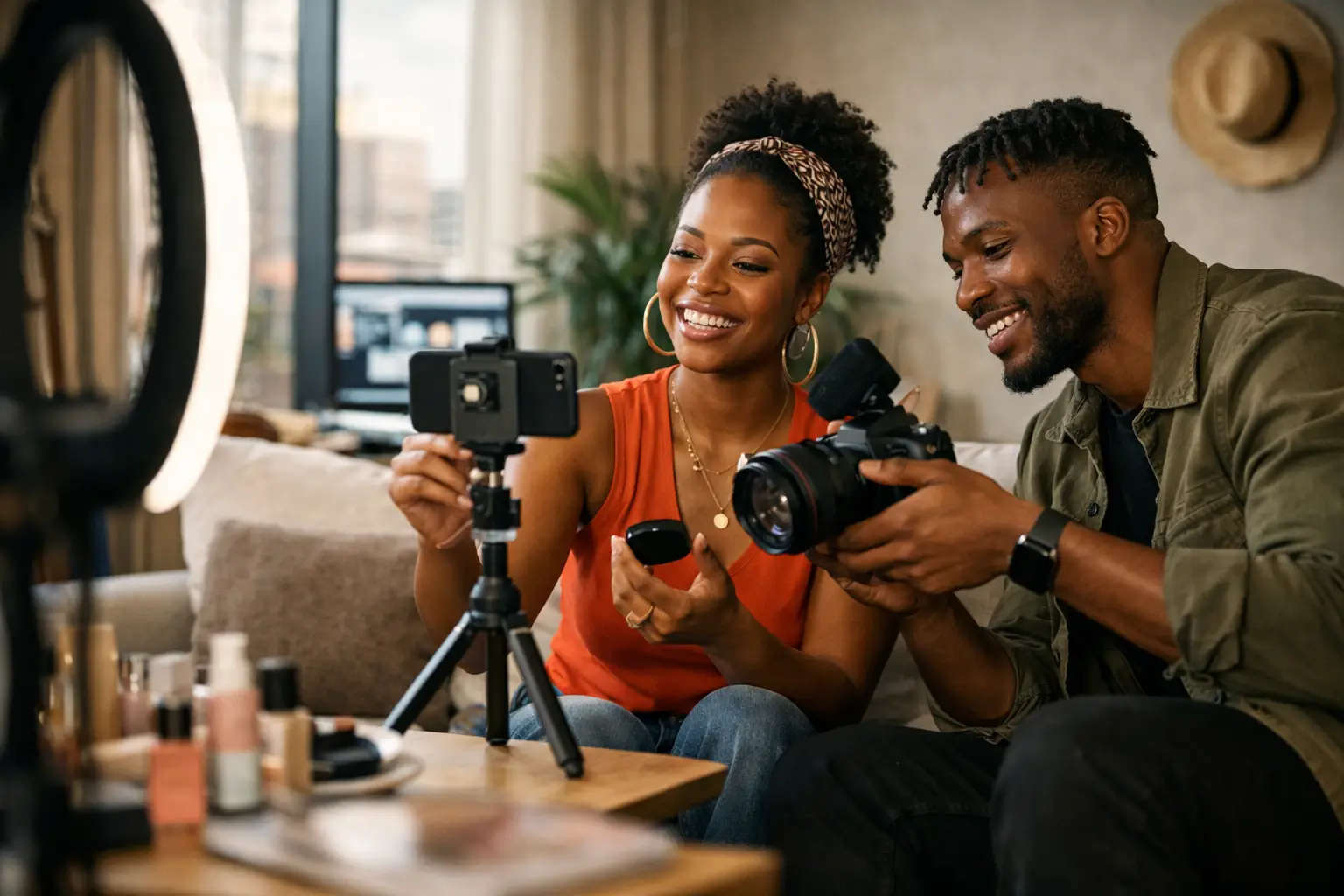
A creator with 8,000 loyal followers can outperform a bigger name with ten times the audience if the fit is right. That is why micro influencer services have become a smart move for brands, producers, agencies, and creative entrepreneurs who need attention that actually converts into clicks, inquiries, and sales.
For project owners, the appeal is practical. You are not just buying reach. You are buying trust inside a specific community, whether that is beauty, fashion, fitness, tech, film culture, campus life, food, or local lifestyle. For creators, micro influencer work opens the door to paid partnerships that feel more aligned with their audience and more sustainable than chasing mass visibility.
What micro influencer services actually cover
Micro influencer services are the operational side of creator marketing. They help brands identify the right creators, negotiate deliverables, manage timelines, review content, track campaign performance, and keep the work moving without turning every collaboration into a manual headache.
That sounds simple until a campaign has ten creators, three content formats, two approval rounds, and a deadline tied to a launch. At that point, the service layer matters as much as the creator talent itself. Good execution protects the brand, gives the influencer a clear brief, and keeps expectations realistic on both sides.
In a creative marketplace environment, these services often sit alongside other production needs. A brand may need a micro influencer for product promotion, a photographer for stills, an editor for cutdowns, a coach for on-camera performance, and a studio rental for the campaign shoot. When those needs are handled in one ecosystem, the campaign moves faster and the brand avoids stitching together five separate vendor relationships.
Why brands are shifting toward micro influencer services
The biggest reason is credibility. Audiences tend to respond better when a creator feels specific, consistent, and genuinely connected to a niche. Micro influencers usually build their communities through repeated interaction, recognizable style, and content that feels closer to peer recommendation than celebrity endorsement.
There is also a budget argument. Larger creators can still be a strong fit, especially for awareness plays, but they often come with higher fees and broader audiences that may not match the exact buyer. Micro influencer services make it easier to build a portfolio of smaller creator partnerships instead of placing the entire campaign bet on one face.
That does not mean smaller is always better. If a campaign needs instant scale, a larger influencer or a mixed-tier strategy may make more sense. But for launches that need engagement, product education, community relevance, or market testing, micro influencers are often the sharper tool.
This is especially useful in markets where culture, language, and audience behavior are not one-size-fits-all. A creator who understands a city, scene, or subculture can carry a campaign with more authenticity than a broad lifestyle account with weak local relevance.
What good micro influencer services look like
The best micro influencer services are not just a list of names. They start with fit. That includes audience quality, content style, posting consistency, communication reliability, and whether the creator has handled partnerships well before.
A good service also separates vanity metrics from useful signals. Follower count still matters, but it is only one input. Comment quality, saves, shares, story interactions, click behavior, audience location, and alignment with the campaign goal all tell a more complete story.
Then comes structure. Clear briefs, usage terms, deadlines, revisions, approval workflows, and payment expectations save everyone time. This matters for brands that run frequent campaigns and for independent creators who need professional processes rather than vague outreach and last-minute changes.
Strong campaign support should also account for content reuse. If a brand wants to turn creator assets into paid ads, website visuals, product page media, or promo edits, that should be handled early. Too many campaigns underperform because the brand treated content rights as an afterthought.
Micro influencer services for different campaign goals
Not every campaign needs the same kind of creator. A product launch, a venue opening, a casting announcement, and a recurring brand awareness campaign all call for different selection criteria.
For awareness, reach and visual consistency may matter most. For conversion, creators with high audience trust and strong call-to-action habits usually perform better. For event promotion, geography can be as important as content style. For user-generated content production, the creator may function less like media inventory and more like a niche content partner.
This is where micro influencer services become more than matchmaking. They help shape the campaign around the result you actually want. If the objective is sign-ups, the service should track that. If the objective is content volume, the workflow should prioritize deliverables and rights. If the objective is credibility in a specialized community, creator selection should reflect that community from the start.
Common mistakes that hurt campaign performance
One of the most common mistakes is choosing creators only by follower count. A smaller creator with stronger audience overlap and better storytelling often delivers more useful results than a bigger account with weak relevance.
Another problem is vague briefing. If the creator does not know the product angle, required talking points, content format, approval process, and timeline, the output becomes inconsistent fast. That creates friction for both sides and usually leads to missed expectations.
Brands also run into trouble when they expect influencer content to do everything at once. A single post is not always enough to create awareness, educate the audience, and drive immediate purchases. Sometimes you need a sequence of stories, a reel, a repost strategy, and supporting paid media. It depends on the product, the market, and the timeline.
Poor measurement is another weak spot. If success is defined only as likes, the campaign may look strong while failing to move traffic or sales. Good micro influencer services connect metrics to intent. That keeps reporting honest and helps the next campaign improve instead of repeating the same assumptions.
How to choose the right micro influencer services
Start with your campaign objective and your production reality. If you need fast execution, look for a service setup that can handle sourcing, creator communication, content review, and asset delivery without delay. If your campaign is more relationship-driven, prioritize talent quality and strategic fit over volume.
You should also look at category depth. A general creator database is less useful than a marketplace or service network that understands how different creative roles work together. If your campaign needs influencers plus stylists, photographers, editors, or location support, integrated access becomes a serious advantage.
Communication quality matters more than brands often expect. A well-run service keeps creators informed, gives clients visibility into progress, and reduces the back-and-forth that slows production. That is especially valuable for agencies, brand teams, and producers managing multiple moving parts.
If you operate across creative sectors, a platform model can make even more sense. A network like Fameidols supports more than influencer discovery. It helps project owners move from idea to execution by bringing talent, services, and production resources into one working environment.
Why this model fits the creative economy now
The creator economy has matured. Brands are more selective, creators are more professional, and campaign expectations are higher. That makes loose influencer outreach less effective than it used to be. Businesses want reliable workflows, clearer performance visibility, and talent that fits both the audience and the production brief.
Micro influencer services answer that shift by treating creator partnerships as operational work, not just promotional luck. They reduce wasted outreach, improve campaign structure, and help brands test niche audiences with more confidence.
For creators, this also creates better opportunities. Smaller influencers are no longer treated as backup options. They are becoming core campaign partners because they can offer focused audience trust, content agility, and more approachable collaboration terms.
That matters in fast-growing creative markets across Nigeria, Kenya, South Africa, and Ghana, where brands and independent project owners often need cost-aware promotion without sacrificing relevance. The creator who speaks to the right audience with authority can be far more valuable than the creator who simply looks big on paper.
The smartest campaigns are rarely built on size alone. They are built on fit, execution, and a clear path from content to outcome. If you are planning your next launch, activation, or brand push, start there – and let the right creator relationships do the heavy lifting.
Leave your comment
You must be logged in to post a comment.